Looking stylish isn’t just about following trends — it’s about knowing what works for your unique body type. The right outfit can enhance your best features, while the wrong one can make you feel less confident. Unfortunately, many people unknowingly make styling choices that clash with their proportions, making their look less flattering than it could be.
The good news? A few simple adjustments can make a huge difference. In this article, we’ll break down 5 common styling mistakes for different body types and give you easy, practical fixes.
1. Wearing Clothes That Don’t Fit Properly
Why It’s a Problem
Ill-fitting clothes can throw off your proportions. Too tight can emphasize areas you’d rather minimize, while too loose can drown your frame.
Example:
A petite person wearing oversized blazers without structure may end up looking smaller and overwhelmed by fabric, while someone with broader shoulders in a too-tight shirt might look restricted and uncomfortable.
How to Fix It
- Invest in tailoring for the perfect fit
- Choose pieces that skim the body rather than cling or hang shapelessly
- Know your exact measurements before shopping online
Pro Tip: Even budget-friendly clothes can look high-end if they fit you perfectly.
2. Ignoring Balance in Proportions
Why It’s a Problem
Your outfit should create a balanced silhouette. If all the volume is on top or bottom, it can throw off your body’s natural harmony.
Storytelling:
Emily, who has a pear-shaped body, often wore oversized sweaters with skinny jeans. While it was comfortable, it made her upper body look even smaller compared to her hips.
How to Fix It
- For pear shapes: Add structure or volume to the shoulders (e.g., puff sleeves, tailored blazers)
- For inverted triangles: Opt for A-line skirts or wide-leg pants to balance the lower half
- Use belts to define the waist and create proportion
3. Choosing the Wrong Prints and Patterns
Why It’s a Problem
Print placement, size, and orientation can either enhance or distort your figure.
Example:
Large, bold horizontal stripes can widen the frame, while vertical lines can elongate the body.
How to Fix It
- Use vertical patterns to create a taller, leaner appearance
- Keep busy prints on areas you want to highlight, and solid colors where you want to minimize
- Scale patterns to your frame — petite figures often look better in smaller prints, while taller frames can handle larger patterns
4. Overlooking the Power of Fabric and Texture
Why It’s a Problem
The fabric’s weight and drape can dramatically change how your body type appears in an outfit.
Data Insight:
Lightweight, flowy fabrics add movement but can cling to curves, while structured fabrics (like cotton twill) can provide shape and definition.
How to Fix It
- Hourglass: Use fabrics with some stretch for a smooth silhouette
- Apple shape: Go for structured fabrics that skim over the midsection
- Rectangular: Experiment with textured fabrics to add dimension
5. Dressing for Trends Instead of Your Shape
Why It’s a Problem
Not every trend works for every body type. Chasing trends without considering your shape can lead to outfits that don’t feel or look right on you.
Storytelling:
During the oversized jogger trend, James — who has a shorter frame — wore loose sweatpants that made him look even shorter. Once he switched to slim-fit joggers, his legs looked longer instantly.
How to Fix It
- Learn which cuts and styles flatter your shape before trying new trends
- Adapt trends by adjusting fit, color, or proportions
- Focus on timeless pieces that always complement your figure
Extra Tips for Dressing Your Body Type
Know Your Body Shape
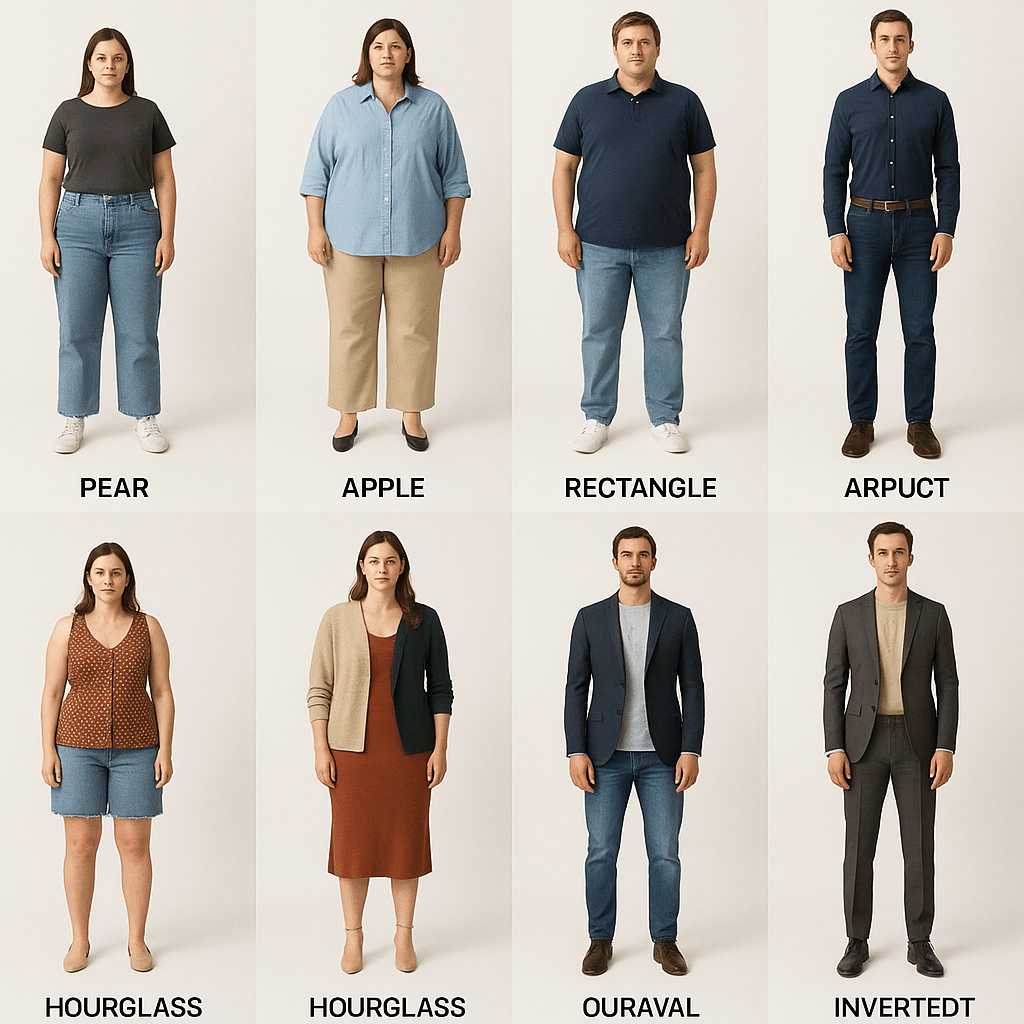
Identify whether you’re pear, apple, rectangle, hourglass, or inverted triangle — it’s the first step to dressing well.
Use Accessories Strategically
Belts, scarves, and statement jewelry can shift the focal point of your outfit to your best features.
Experiment and Take Photos
Sometimes the mirror lies. Taking photos of outfits helps you see proportions more clearly.
Conclusion
Great style starts with understanding your body type and knowing how to dress for it. By avoiding these five common mistakes — poor fit, unbalanced proportions, wrong prints, ignoring fabric, and chasing trends blindly — you can create outfits that highlight your strengths and boost your confidence.
Call to Action:
Next time you shop or plan an outfit, think about your body type first. Make one change based on these tips and see how it transforms your look.