Ever notice how some outfits feel “done” even when they’re simple? It’s rarely the price tag—it’s the details. The right texture, a sharper silhouette, a confident neckline, or a purposeful accessory can flip your look from ordinary to unforgettable. Think of these details as micro-upgrades: tiny choices that create instant polish, presence, and poise.
small details, big glow-up
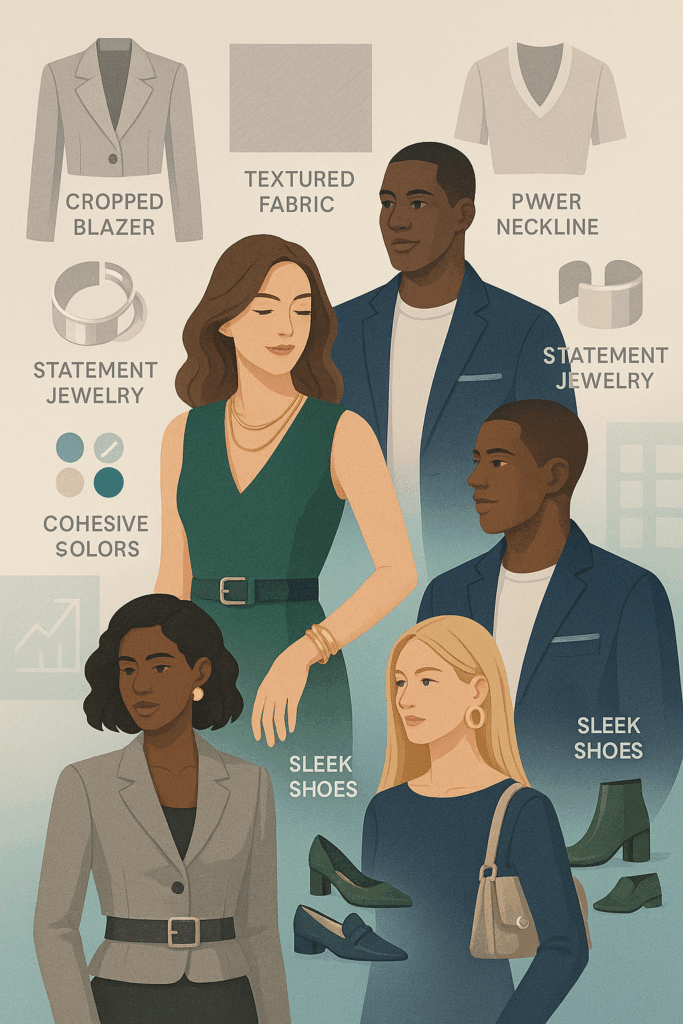
Below are nine fashion details you can apply today—plus practical tips to personalize them for your body shape, lifestyle, and budget.
1) Strategic proportions: play with structure
Why it works: Proportion guides the eye, shaping how tall, tailored, or relaxed you appear.
Try this:
- Half-tuck a shirt to define the waist without losing flow.
- Pair cropped jackets with high-waist trousers to lengthen the legs.
- Balance oversized tops with straight or tapered bottoms.
Story: Dara—5’2”, creative professional—swapped long cardigans for a cropped blazer and straight jeans. Same sneakers, same tee, but her silhouette looked taller and sharper at meetings.
2) Texture stacking: luxe without the fuss
Why it works: Texture adds depth, catching light in interesting ways for a richer look.
Try this: Mix matte + sheen (cotton tee with satin skirt), or smooth + nubby (silk blouse with bouclé jacket). Keep colors close to avoid chaos—think “tone-on-tone, different textures.”
Pro tip: Start with one hero texture—like a ribbed knit or patent shoe—and let everything else stay simple.
3) The power neckline: frame your face
Why it works: Necklines influence posture and how your face, shoulders, and collarbone are perceived.
Choose by effect:
- V-neck: elongates, subtly sharpens the jawline.
- Scoop or square: softens and balances broader shoulders.
- Boat neck: elegant, widens the shoulder line for symmetry with wider hips.
- Mock neck: minimal, powerful, works under blazers.
Fit check: If you wear statement earrings, keep the neckline cleaner; if the neckline is dramatic, choose subtler jewelry.
4) Waist definition: subtle structure, major polish
Why it works: Even minimal definition creates a tailored feel—no corsetry required.
Options:
- D-ring belt over blazers or trench coats.
- Tie belts on shirt dresses to shape without bulk.
- Front tuck with mid-rise pants for gentle definition.
Story: Rio always felt “boxy” in office dresses. A slim leather belt in the same color as his dress sharpened the line instantly—coworkers asked if he’d tailored the garment.
5) Shoe intent: anchor the outfit’s mood
Why it works: Shoes set the tone—sporty, refined, rebellious—often more than clothes.
Match the message:
- Pointed flats/heels: instant refinement with denim or tailoring.
- Chunky loafers: modern edge for preppy looks.
- Minimal trainers: smart-casual for tech offices and weekend uniforms.
- Sleek boots: lengthen the leg line with slim trousers or midi skirts.
Fit & comfort: Comfort is confidence. If a shoe makes you adjust your walk, the style reads awkward—size and support matter.
6) Jewelry choreography: edit for impact
Why it works: Jewelry directs attention and can punctuate a look like punctuation in a sentence.
Formulas:
- One statement, two supporting: big earrings + thin rings + bare neck.
- Stacked delicacy: layered thin necklaces + tiny hoops + a cuff.
- Sculptural solo: one bold cuff or architectural ring with a clean outfit.
Tip: If your outfit has loud prints or heavy texture, go simpler on jewelry so the eye knows where to rest.
7) Color stories: confidence through harmony
Why it works: Cohesive color elevates even basics.
Three easy palettes:
- Monochrome: same color family, varying shades (navy head-to-toe feels smart).
- Analogous: neighbors on the color wheel (olive + khaki + camel = luxe).
- Two-tone pop: grounded base (charcoal) plus one saturated accent (cobalt bag).
Skin-tone synergy: Warm complexions love camel, rust, olive; cool complexions glow in charcoal, berry, cobalt. Neutrals—black, white, navy—are universal anchors.
8) Tailoring touchpoints: micro-alterations, macro results
Why it works: Clothes rarely fit off the rack; small alterations skyrocket perceived quality.
High-impact edits:
- Hem pants to hit just above the shoe for crisp lines.
- Take in the waist of blazers or dresses slightly.
- Shorten sleeves so cuffs don’t puddle over the hand.
- Nip the shoulder seam on tees for sharper drape.
Budget tip: Prioritize pieces you wear weekly (blazer, jeans, work trousers). Tailoring one hero item often upgrades an entire wardrobe.
9) Finishing touches: the style signature
Why it works: One consistent detail becomes your visual signature—memorable and personal.
Ideas:
- A silk scarf tied on bag handles or worn as a neckerchief.
- Minimal belt with a distinctive buckle shape.
- Matte red lip or a precise eyeliner style.
- Clean pocket square for sharp jackets.
- Distinct watch/bracelet stack that’s understated but repeatable.
Story: Lina felt invisible in meetings. She adopted a simple rule: neutral outfits + one bold cuff bracelet. Colleagues started associating her with “sleek, composed, decisive.”
Putting it together: three ready-to-wear formulas
A. Polished Casual
White tee (mock neck) + cropped navy blazer + straight dark jeans + pointed flats + slim belt + small hoop earrings.
Why it works: Strong proportions, clean neckline, anchored footwear.
B. Creative Smart
Satin slip skirt (charcoal) + ribbed knit (gray) half-tucked + chunky loafers + sculptural ring + crossbody with silk scarf.
Why it works: Texture contrast, subtle waist, one statement accessory.
C. Minimal Power
Column dress (ink) + tailored trench with belt + sleek ankle boots + single cuff bracelet + structured tote.
Why it works: Monochrome elongation, waist definition, quiet luxury.
How to find your best details
Step 1: Audit the mirror
Take photos of three outfits you wear often. Note what feels “off”: hem length, sleeve puddling, undefined waist, heavy prints with heavy jewelry.
Step 2: Pick one lever
Choose one category to change this week—proportions, shoes, or jewelry. Overhauls overwhelm; micro-wins stick.
Step 3: Create a 5-piece “detail kit”
- Slim belt in your staple neutral
- Cropped third layer (blazer, cardigan)
- One pair pointed flats or sleek boots
- Everyday hoops + one sculptural piece
- Tailor’s card for two quick alterations
Step 4: Repeat and refine
Wear your updated formula twice in real life. Adjust what pinches, shortens, or distracts. Confidence grows from comfort and repetition.
Common pitfalls (and easy fixes)
- Clutter conflict: Too many statements at once.
Fix: Limit to one hero element per outfit (bold jacket or bold shoes). - Color overload: Saturated colors fighting each other.
Fix: Ground bright pieces with charcoal, navy, cream, or tan. - Wrong shoe energy: Sporty sneakers with a formal suit.
Fix: Swap to minimal trainers or loafers for cohesion. - Neglected fit: Great pieces that sag or drag.
Fix: Hem, nip, and shape—15 minutes at a tailor can transform it.
Mini case study: the Monday-to-Friday glow-up
Context: Arif works hybrid in marketing. His outfits felt “fine” but forgettable.
Approach:
- Week 1: Cropped overshirt + straight chinos + pointed loafers.
- Week 2: Added a slim belt and half-tuck; switched to a mock-neck tee.
- Week 3: Tailored trouser hem; chose a single cuff bracelet as a signature.
Result: Colleagues noticed the sharper silhouette; Arif reported feeling “more prepared” in client calls—proof that style confidence feeds performance.
SEO checklist (reuse for your blog)
- Use intent keywords: fashion details, style confidence, proportions, texture mixing, tailoring tips.
- Add descriptive headers and internal links to related pieces (e.g., “How to Choose the Right Blazer,” “Accessories Capsule Guide”).
- Include original images or diagrams (before/after hem, neckline chart). Compress for speed.
- Consider a short FAQ (schema-marked): “How do I look taller with clothes?” “What accessories work for minimal style?”
Conclusion: detail is the new luxury
Confidence isn’t about chasing trends; it’s about refining the little things until your clothes feel like you. Start with one lever—proportion, texture, or a finishing touch—and build a repeatable formula. When your outfit expresses intent, people feel it. So will you.